Bedding guide
Coyuchi Cotton Percale: A Guide to Cool, Crisp Bedding
On a warm night, the smallest details can shape the feel of a bedroom: the air moving across a sheet, the texture beneath a hand, the way a duvet settles at the foot of the bed. Cotton percale is valued for its breathable structure and fresh, matte finish. This guide explains what that weave feels like, how to assess bedding choices, and how thoughtful care can help preserve comfort over time.
A weave with a crisp point of view
Percale is a plain-weave fabric, made by crossing each lengthwise yarn over and under each crosswise yarn in a regular pattern. The structure is simple, but its effect is distinctive. Compared with fabrics that have a more lustrous or drapey surface, cotton percale tends to look matte and feel smooth, dry, and crisp. It is often described as having the clean, freshly laundered character of a well-made hotel sheet—though the experience of any bedding depends on its fiber, finishing, construction, and the sleeper using it.
That crispness is not the same as stiffness. New percale can feel firm or slightly papery to some people, while others enjoy the neat, cool hand from the first night. With laundering and use, many cotton fabrics become more pliable. The pace and degree of change vary; fiber quality, yarn, finishing methods, water conditions, and washing habits all play a part. Rather than expecting a fabric to become dramatically softer after a set number of washes, consider whether its initial feel is already close to what you like.
The even, relatively open character of a plain weave also contributes to percale’s reputation for breathability. Fabric is only one part of a sleep environment, and no sheet can guarantee a particular body temperature. Still, sleepers who dislike a clingy or heavy surface may appreciate percale’s lighter, drier sensation. Room temperature, humidity, mattress materials, blankets, and personal comfort all matter too.
What “cool” means in the bedroom
When people call bedding cool, they may be describing more than temperature. A smooth surface can feel cool when first touched, while a fabric that releases moisture and allows air to move may feel less stuffy over the course of a night. Percale’s crisp, matte surface offers a different sensory experience from sateen, whose woven structure generally creates a smoother, more lustrous face and a softer drape. Neither weave is universally better; they answer different preferences.
Someone who likes a tidy, lightly textured bed may find percale appealing. A sleeper who wants a fluid, silky surface may prefer another weave. Those who tend to sleep warm often begin their bedding search with breathable natural fibers and lighter layers, but it is useful to treat “cooling” as a comfort preference rather than a promise. Fabric cannot substitute for a suitable room climate, and individual responses to warmth vary.
Weight and layering change the picture. A light percale sheet beneath a thick duvet may still feel warm overall; a breathable top layer paired with a lighter cover can create a different balance. Pillowcases matter as well, because they remain in close contact with the face and hair. When building a bed, consider how each layer behaves together rather than judging a sheet in isolation.
Understanding thread count without getting lost in the numbers
Thread count is one measure shoppers often encounter, but it is not a complete rating of comfort or quality. It generally refers to the number of threads in a square inch of fabric, counting yarns running in both directions. The figure does not reveal everything about the cotton, yarn size, finishing, or weaving. A higher number alone does not guarantee a cooler, stronger, or more comfortable sheet.
For percale, the weave and the quality of its materials are central to the overall hand. A moderate thread count can produce a crisp, breathable fabric when the yarn and construction are well suited to the purpose. Conversely, a number on a label cannot tell you whether the surface will feel too firm, too smooth, or just right for your preferences. Read the full product description, check the fiber content, and look for clear care instructions.
Labels may also use terms such as “long-staple cotton” or describe a particular finishing process. These details can help shoppers understand a fabric, but they should be considered alongside the maker’s specifications and the feel you want—not treated as guarantees of a particular sleep experience. If possible, handle a fabric sample or begin with a single item before replacing an entire bedding set.
Choosing Coyuchi bedding for your preferences
The title of this guide points to Coyuchi, a bedding name many shoppers may encounter while comparing cotton percale. A useful approach is to evaluate any specific Coyuchi item by its listed fiber content, weave, construction, dimensions, color, and care requirements. Product names can cover different styles and specifications, so check the details for the exact item rather than assuming every piece in a brand’s assortment has the same feel.
Start with the sensation you want. If crispness and a matte finish are high on your list, percale may be worth exploring. If you prefer a more fluid drape or a silkier surface, compare it with other cotton weaves before deciding. Consider how the fabric will work in your climate and with the layers you already own. A lightweight duvet cover, for example, may be easier to use throughout the year than a heavier combination, but the best arrangement depends on the room and the sleeper.
Next, check practical fit. Confirm the mattress dimensions and depth, the duvet insert size, and the pillow sizes you use. A beautifully made cover that pulls tight around an insert or slips off a pillow will be less satisfying in everyday use. If you are buying separates, note whether pillowcases are sold as pairs and whether decorative shams are sold individually; packaging and sizing conventions can differ by collection.
Color and finish influence the character of a room as much as the fabric itself. White and pale neutrals make a bed feel bright and spare, while deeper or earthier shades can introduce a quieter sense of weight. A border, hem, or subtle contrast trim gives a sheet or pillowcase definition without requiring a busy pattern. For a coordinated look, repeat one color or texture in a small number of places rather than matching every surface exactly.
A percale example: tailored pillowcases and shams
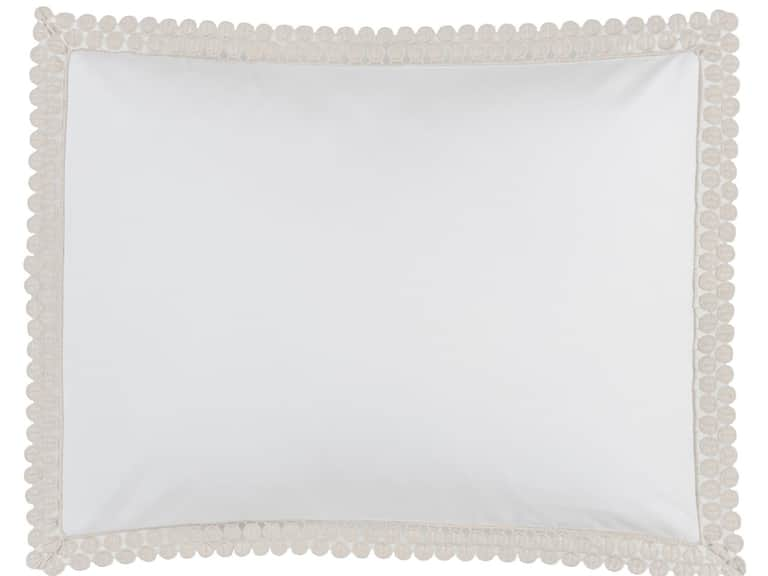
For shoppers comparing the feel of cotton percale, the BOVI Magnolia Pillowcases and Shams provide a relevant example from the bedding selection. They are described as 100% cotton percale with a 200 thread count and a crisp, breathable feel. The collection has a matte finish and a distinctive border detail, bringing a tailored note to the top of the bed without relying on a pronounced print.
The Magnolia pillowcases come in sets of two, while shams are sold individually. Shams are available in Boudoir, Standard, King, and Euro sizes, and the pieces are offered in three trim colorways: White, Dove, and Flax. Machine-washability makes the collection suited to regular household care, subject to the instructions supplied with the item. These details illustrate the kinds of specifications worth checking when comparing percale: fiber, thread count, finish, size, color, and how each piece is sold.
A pillowcase and a sham have different jobs in a layered bed. Pillowcases are intended for sleeping pillows and routine use; shams typically add a decorative or coordinating layer. A small number of well-chosen pieces can keep the arrangement practical. For example, sleeping pillows can remain easy to reach, while one or two shams add structure during the day and can be removed at bedtime.
Building a balanced bed, one layer at a time
A comfortable bed is not necessarily a crowded one. Begin with the items that touch the body most often: fitted sheet, top sheet if you use one, pillowcases, and the cover or blanket suited to the season. Then consider whether decorative layers earn their place. A duvet cover can protect an insert and help establish the room’s palette, while shams add shape and a coordinated finish. Each additional layer changes both the appearance and the way the bed feels.
Contrast can be more engaging than exact matching. Crisp percale beside a softly textured quilt, a restrained border against a plain duvet, or a neutral base with a muted accent can give a bedroom depth without visual clutter. Keep scale in mind: a small trim detail may be lost among large patterns, while several competing motifs can make a calm room feel busy. Repeating a color in the bedding and one other element—such as a rug or curtain—can provide continuity.
Think about daily routines, too. If the bed is made every morning, pieces that fold and smooth easily may be welcome. If the room is used for reading or lounging, pillows and layers should be easy to rearrange. In a smaller bedroom, a simpler palette and fewer decorative pieces can make the space feel more open. The aim is not to reproduce a showroom arrangement, but to create a bed that remains useful after the day begins.
Care that protects the fabric’s feel
Good bedding care begins with the label. Follow the manufacturer’s guidance for water temperature, detergent, drying, and any restrictions on bleach or other treatments. Instructions can vary even among cotton products, and the label is more reliable than a universal rule. When in doubt, use a gentle approach and avoid exposing the fabric to more heat or abrasion than necessary.
Wash bedding at a frequency that suits your household, climate, and routine. Avoid overloading the machine; sheets need room to move through the wash and rinse. A mild detergent used according to its directions is usually preferable to adding more than needed. Residue can affect the hand of fabric, while harsh treatment may shorten the life of fibers. Separate heavily soiled items from lightly used bedding when practical, and take care with pieces that have decorative borders or trims.
Drying deserves similar attention. Excessive heat can stress cotton and encourage shrinkage, so use the temperature recommended on the care label. Remove items when they are dry rather than leaving them in a hot drum for an extended period. If a crisp appearance matters, smooth seams and hems while the fabric is still slightly warm or damp, then fold or place the bedding promptly. Natural cotton can wrinkle; that relaxed character is part of its everyday appeal for some households, while others may choose to iron according to the label.
Store clean bedding in a dry, well-ventilated place. Make sure pieces are fully dry before putting them away, and avoid compressing them for long periods if space allows. Rotating between sets spreads wear across the collection and gives each set time between uses. Small habits—checking care instructions, treating stains promptly according to the label, and avoiding unnecessarily rough cycles—can help maintain a fabric’s appearance and hand.
Common questions about cotton percale
Does percale feel cool all night?
Percale is often chosen for its breathable construction and cool, crisp initial feel, but no fabric can guarantee that a sleeper will stay cool. Room conditions, blankets, mattress materials, and personal temperature preferences all affect comfort. If you tend to feel warm, evaluate the whole bedding system, including the weight of the duvet and the number of layers.
Will cotton percale soften with washing?
Many cotton percale fabrics become more pliable through use and laundering, but the amount of change depends on the fabric and how it is cared for. A new set may feel crisp for some time. Choose a starting texture you can enjoy rather than purchasing on the assumption that washing will transform it into a different kind of fabric.
Is a higher thread count always better?
No. Thread count is only one specification and does not describe the whole fabric. The cotton, yarn, weave, finishing, and construction contribute to feel and performance. Compare complete product details and consider what matters most to you: a crisp surface, a certain weight, easy care, a particular size, or a specific color.
How can I tell whether percale suits me?
Think about bedding you have liked in the past. If you enjoy a matte finish, a neat surface, and a lighter, less slippery feel, percale may be a good candidate. If you prefer a satiny touch or a fabric that drapes closely, compare other weaves. Where possible, try a sample or begin with pillowcases before committing to a full set.
A small decision with a lasting everyday presence
Bedding is encountered repeatedly and at close range. Its value is not only in how it looks when arranged, but in how it feels when a sleeper turns down the covers, rests a cheek on a pillow, or pulls a sheet into place on a quiet morning. Cotton percale offers a particular combination: a plain-weave structure, a matte appearance, and the crisp, breathable character many people seek in warm-weather bedding.
For Coyuchi or any other bedding choice, the most useful guide is a clear reading of the details and an honest account of your own preferences. Check fiber and weave, make sure the dimensions fit, understand how the pieces are sold, and follow the care label. Then let the room’s other materials—wood, paint, curtains, and soft furnishings—provide context rather than competition. The result need not be elaborate. A well-chosen set of breathable bedding, cared for thoughtfully and arranged in a way that suits daily life, can make the bedroom feel composed and distinctly your own.